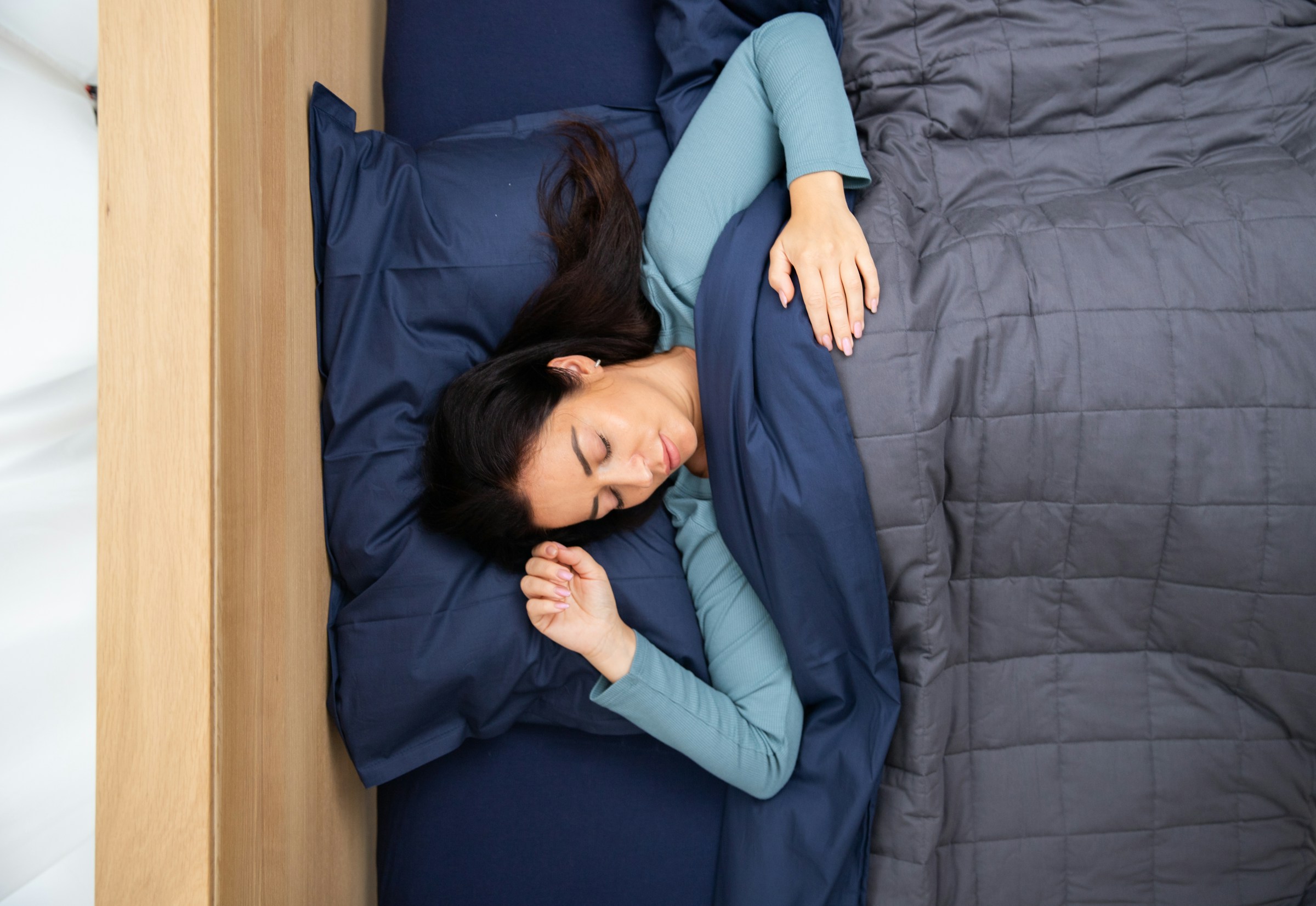

Night anxiety can make bedtime feel overwhelming. The room gets quiet, your body is tired, but your mind won’t slow down. Thoughts race. Sleep feels just out of reach.
Weighted blankets have become a popular way to ease this restless feeling. Many people say the gentle pressure helps them feel calmer and more secure at night.
But do weighted blankets really help with night anxiety, or are they just another sleep trend?
What Is a Weighted Blanket?
A weighted blanket is a blanket designed to apply gentle, even pressure across your body while you rest.
This pressure, often compared to a soft hug, works by stimulating the nervous system in a way that can help the body feel calmer and more grounded.
Most weighted blankets are filled with small glass beads or plastic pellets that are evenly stitched into pockets, which helps the weight stay balanced rather than bunching in one spot.
They usually range from about 5 to 30 pounds, with many people choosing a blanket that’s roughly 10 percent of their body weight for comfort and safety.
The outer fabrics vary and often include cotton, fleece, bamboo, or minky, which allows people to choose based on warmth and texture preference.
Unlike regular blankets that mainly provide warmth, weighted blankets are designed to create a sense of security and stability, which can be especially helpful when anxiety makes the body feel tense or restless at night.
Why Anxiety Feels Worse at Night
Anxiety often feels stronger at night because the world finally slows down. During the day, noise, tasks, and conversations keep your attention busy, but once you lie down, those distractions disappear, and your thoughts step forward.
The mind starts replaying worries, conversations, and “what if” scenarios, a pattern known as mental rumination that can feel impossible to switch off.
As your body tries to relax, anxiety sends mixed signals, keeping your nervous system on alert instead of letting it settle. This tension can delay sleep, cause frequent waking, or make rest feel light and unrefreshing.
Over time, poor sleep and anxiety begin to feed each other, creating a cycle where nighttime becomes a trigger for stress rather than a place of rest.
How Weighted Blankets May Help With Night Anxiety
Weighted blankets may help with night anxiety by using something called deep pressure stimulation, which simply means steady, gentle pressure on the body.
This kind of pressure can signal the nervous system that it is safe to relax, much like the calming feeling of a hug or being tucked in securely.
When the body senses this pressure, it may shift out of a stress response and into a calmer state, slowing the heart rate and easing physical tension.
For many people, this helps quiet the body first, which can make it easier for the mind to follow. The added weight can also create a sense of grounding, keeping you more present in your body instead of lost in racing thoughts.
Over time, this feeling of safety and containment can make bedtime feel less threatening and more predictable, helping anxiety loosen its grip as you settle in for sleep.
What the Research Says
Research on weighted blankets suggests they may offer real benefits for some people dealing with anxiety and sleep problems, but the results are not the same for everyone.
Several studies have found that weighted blankets can help reduce nighttime restlessness, improve sleep quality, and increase feelings of calm by promoting relaxation in the nervous system.
Some participants also report falling asleep faster and waking less during the night, which supports the idea that steady pressure can help the body settle.
That said, the research is still developing, and many studies are small or rely on self-reported experiences rather than long-term data.
Not all studies show strong effects, and some people feel little change or even discomfort, especially if the blanket feels too heavy or warm.
Overall, the evidence points to weighted blankets as a helpful tool for some, but not a guaranteed solution, making personal comfort and individual response an important part of the decision.
Pros and Cons of Using a Weighted Blanket
Pros
- May reduce restlessness by helping the body feel more settled at night
- Can improve overall sleep comfort through gentle, even pressure
- Offers a non-medication option for managing night anxiety
Cons
- Not suitable for everyone, especially those with certain medical conditions
- Can feel too warm or restrictive for some sleepers
- Often requires an adjustment period before it feels comfortable
Who Should (and Shouldn’t) Use a Weighted Blanket
People with anxiety, insomnia, or sensory sensitivity
Weighted blankets can be especially helpful for people who feel restless, tense, or overstimulated at night.
Those with anxiety or insomnia may benefit from the steady pressure, which can help the body feel calmer and more grounded as it prepares for sleep.
People with sensory sensitivity often find comfort in the predictable, even weight, which can reduce the feeling of being on edge. That said, comfort is personal, and what feels soothing to one person may feel overwhelming to another.
Safety considerations and medical conditions
Weighted blankets are not recommended for everyone. People with breathing difficulties, sleep apnea, mobility issues, circulation problems, or certain chronic conditions should speak with a healthcare provider before using one.
The blanket should never restrict movement or make it hard to breathe. If you feel trapped, overheated, or uncomfortable, it’s a sign the blanket may not be right for you.
Age and weight guidelines
For safety and comfort, most experts suggest choosing a weighted blanket that is about 10 percent of your body weight.
Children should only use weighted blankets designed specifically for their age and size, and they should always be able to remove the blanket on their own.
Weighted blankets are generally not recommended for infants or very young children. Choosing the right weight is key, as a blanket that is too heavy can cause discomfort rather than calm.
How to Choose the Right Weighted Blanket
Ideal weight recommendation
The most common guideline is to choose a weighted blanket that is about 10 percent of your body weight. This amount of weight is usually enough to provide calming pressure without feeling overwhelming.
If you are between sizes or unsure, going slightly lighter is often more comfortable, especially if you are new to weighted blankets. The goal is to feel gently held, not pinned down.
Fabric and temperature considerations
Fabric choice matters more than many people expect. Cotton and bamboo tend to feel cooler and breathe better, which can help if you sleep warm or deal with night sweats.
Fleece and minky fabrics feel softer and cozier but can trap more heat. Paying attention to how warm you usually feel at night can make the difference between a calming sleep tool and a blanket that feels uncomfortable.
Size and care tips
Weighted blankets are designed to cover your body, not hang over the sides of the bed like a duvet. Choosing a size that matches your body rather than your mattress helps keep the weight evenly distributed.
It’s also important to check care instructions, as some weighted blankets require spot cleaning or a removable cover. Easy care can make regular use more realistic and less stressful.
Tips for Using a Weighted Blanket Effectively
When to use it
Some people feel comfortable using a weighted blanket for the entire night, while others prefer shorter periods, especially at the beginning.
If night anxiety is strongest while falling asleep, using the blanket during the first 20 to 30 minutes can be enough to help the body settle.
There is no single right approach, and listening to how your body responds matters more than following a strict rule.
Pairing with calming bedtime habits
Weighted blankets tend to work best when combined with simple, calming routines. Dimming the lights, slowing your breathing, and limiting phone use can help signal that it’s time to rest.
The blanket then becomes part of a larger pattern of safety and consistency, rather than a quick fix. Over time, this combination can make bedtime feel more predictable and less stressful.
What to do if it feels uncomfortable at first
It’s normal for a weighted blanket to feel unusual during the first few nights. If it feels too heavy, try placing it over your legs or torso instead of your whole body.
You can also start with shorter use and slowly increase the time as your body adjusts. If discomfort or anxiety increases, it’s okay to stop using it, as comfort should always come first.
Alternatives to Weighted Blankets for Night Anxiety
Other grounding tools
If a weighted blanket doesn’t feel right, other grounding tools can offer similar comfort without added weight. A heavy quilt, a body pillow, or even gentle compression clothing can provide a sense of containment.
Some people find comfort in holding a pillow or placing light pressure on the legs or chest, which can help the body feel supported without feeling restricted.
Relaxation techniques
Simple relaxation practices can calm the nervous system and reduce racing thoughts before sleep. Slow breathing, guided body scans, or quiet music can help shift the body out of alert mode.
These techniques work by focusing attention on the present moment, which gives the mind a break from worry. Even a few minutes of steady breathing can make a noticeable difference.
Sleep environment adjustments
The sleep environment plays a powerful role in night anxiety. Lowering the lights, reducing noise, and keeping the room cool can help the body relax more easily.
Removing stimulating screens before bed and creating a consistent nighttime routine can also reduce mental tension. When the space feels calm and predictable, the mind often follows.
Final Thoughts
Weighted blankets can be a helpful tool for night anxiety, but they are not a one-size-fits-all solution. Some people feel calmer and sleep better, while others may not notice much change.
The key is paying attention to your own comfort and response. Try what feels safe, adjust as needed, and choose what helps your body relax and rest more easily.
FAQs
Do weighted blankets work for anxiety-related insomnia?
They can help some people by calming the body and reducing restlessness, which may make falling asleep easier. Results vary, and they tend to work best as part of a calming bedtime routine.
How long does it take to notice benefits?
Some people feel a difference within the first few nights, while others need a week or more to adjust. The effect often becomes clearer as the body gets used to the pressure.
Can weighted blankets make anxiety worse?
Yes, if the blanket feels too heavy, warm, or restrictive, it can increase discomfort or anxiety. This is why choosing the right weight and stopping use if it feels wrong is important.
Is it safe to use one every night?
For most healthy adults, using a properly weighted blanket each night is considered safe. Anyone with medical conditions that affect breathing, movement, or circulation should check with a healthcare provider first.
Are weighted blankets good for hot sleepers?
They can be, but fabric choice matters. Breathable materials like cotton or bamboo are better options for hot sleepers, while thicker fabrics may trap too much heat.
